

Many, many centuries ago, in an era when tea was still considered more of a medical concoction than a daily pleasure, the ancient Chinese text Shin Lun noted that, “To drink k’u’ t’u [bitter t’u] constantly makes one think better.” Though the word “t’u” has transformed into “tea,” the idea that tea can affect your mental processes hasn’t changed a bit…and part of that effect is due to a naturally occurring compound known as L-theanine.
What is L-Theanine?
First identified and named in 1949 by Japanese researcher Yajiro Sakato, L-theanine is an amino acid primarily found in the leaves of the tea plant, Camellia sinensis (it’s also found in a few mushrooms, but I’m not writing a mushroom blog here).
In tea, L-theanine functions as a flavor component, balancing the bitterness of caffeine and polyphenols (catechins, theaflavins, tannins, and flavonoids) with savory, sweet, and brothy notes. It’s a major contributor to the umami flavor found in high-quality green teas, particularly those that are shaded for a few weeks before harvesting (which prevents sunlight from converting L-theanine into relatively bitter catechins).

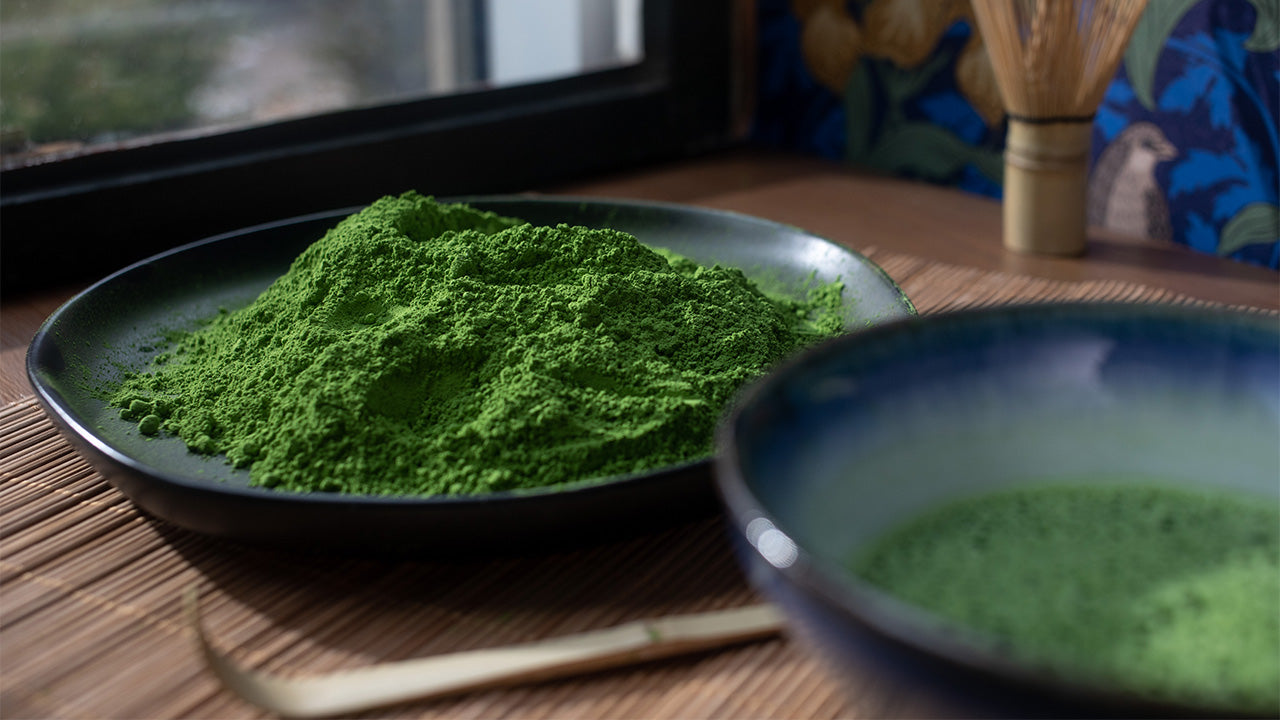
Our Matcha Tea Collection is full of such teas, including Jobetsugi Ceremonial Matcha (Thin Grade). Crafted from shaded tencha leaves harvested in May (when L-theanine and other amino acids responsible for umami are at their peak), this matcha, sourced from Japan’s Wazuka Valley, offers flavors of melon, spinach, and fresh lettuce.
In tea, L-theanine mellows the stimulating effects of caffeine by contributing to changes in the brain that can help calm, relax, and center our thoughts…and it’s these same qualities that have made it a popular dietary supplement for those in search of enhanced relaxation and focus.

What Are the Benefits of L-Theanine?
L-theanine offers multiple benefits, but the main ones can be narrowed down to three. It can reduce stress and anxiety, improve sleep, and enhance focus. (I know that last one might seem a little contradictory at first, but stick with me…all will be revealed.)
Reduced Stress and Anxiety
There are plenty of teas out there that can relax you (and you’ll find many of them…including our beloved Chaga Ashwagandha…in our Celebrate Relaxation Day With Soothing Harney Teas blog). However, those teas don’t necessarily include L-theanine.
L-theanine is classified as an anxiolytic, meaning that it can lower your heart rate, decrease your blood pressure, and generally soothe you. However, while some anxiolytics function as sedatives, L-theanine promotes relaxation without sedation…creating a state of calm wakefulness.
Improved Sleep
While many herbal tisanes (such as Hemp Moringa and others in our “Teas for Sleep” collection) are appropriate for evening sipping, decaffeinated teas made from the Camellia sinensis plant offer the added benefit of L-theanine. Take, for instance, our Decaf Sencha. This lighter-bodied tea and its delicate, vegetal flavors have led at least one of our customers to proclaim it, “the best decaffeinated green tea.”
To be clear, L-theanine doesn’t knock you out…but it does calm your mind and reduce anxiety. When you’re less wired and more relaxed, it’s easier to fall asleep when it’s time for bed.
Enhanced Focus
When our bodies are under stress, they increase production of certain stress hormones (such as corticosterone) that can inhibit memory formation. L-theanine decreases that production, thereby supporting cognition and improving memory. Some studies have indicated that the compound also increases attention spans and reaction times.
How Does L-theanine Do All That?
This is going to be a pretty science-intensive answer, so pardon me while I pull on a white lab coat and a pair of safety goggles.
Let’s start by talking about gamma-aminobutyric acid, also known as GABA. As a neurotransmitter in the central nervous system, GABA settles down your neurons, preventing overactivity that can cause anxiety and stress.
Several foods and drinks can increase GABA and reduce anxiety, producing a sense of “alert calm.” One of these is Yerba Mate (found in our brother company’s, The Hemp Division, Yerba Mate, Yaupon & Mint - Focus herbal elixir). Another is L-theanine.
Besides boosting your brain’s GABA levels, L-theanine also raises the level of other neurotransmitters, including serotonin and dopamine…all of which encourage your body to settle down.
Also, L-theanine is a multitasker. Because while it’s boosting GABA levels in your brain, it’s also lowering other chemicals linked to stress and anxiety.
Some products, such as our Taiwanese GABA Oolong tea, include not just L-theanine, but also considerable levels of GABA, produced through a specialized (and natural) anaerobic fermentation process. (It’s also worth mentioning that GABA Oolong is delicious, with an aroma and flavor reminiscent of toasted grains.)
Finally, L-theanine enhances alpha brain waves. Why is that good? Let me explain.
Your brain has five types of waves. Delta waves occur during dreamless sleep. Theta waves occur during light sleep (or deep relaxation). Alpha waves occur when you’re awake and relaxed. Beta waves occur when you’re conscious and alert (AKA most of your waking life). Gamma waves occur when you’re learning, processing information, or solving problems.
So, enhancing alpha waves is basically supporting conscious relaxation, like when you’re meditating. Instead of being distracted, you’re calm and focused…which is great for cognitive function and overall well-being.
How Can We Get More L-theanine In Our Lives?
Well, one way to consume more L-theanine would be to dash out to your nearest Supplements-R-Us retailer and buy a bottle of capsules…but to my way of thinking, gulping down a white pill doesn’t sound particularly cozy. If you’re looking for a more enjoyable way to get L-theanine…say, through an everyday luxury that can engage your senses with glowing warmth, alluring colors, subtle aromas, and complex flavors…I’d recommend drinking a few teas that are especially rich in the compound (and it so happens I know a few).
Before I start making suggestions, however, I’ll note that black teas generally have less L-theanine than green teas. That’s due to the process that tea leaves go through to become black. Oxidation, withering, and drying can all decrease L-theanine, which means that the black teas with the highest concentrations of the compound are those that undergo the least processing. Teas produced in the Darjeeling tea region (on the border of Nepal and Bhutan) are less processed than most conventional black teas, and their L-theanine levels are even higher when the plants’ leaves are harvested in spring…as is the case with the“First Flush” teas in our Darjeeling collection.
By contrast, green tea leaves are steamed or pan-fired after harvesting, which stops oxidation and preserves L-theanine.

Our Japanese Sencha green tea was a true everyday luxury for our founder, John Harney, who drank it each morning for more than 10 years. Hailing from the central Shizuoka province of Japan, this medium-bodied brew has a spinachy aroma with notes reminiscent of toasted bread and mild vegetal flavors with light accents of citrus and toast.
Green teas grown in shade have even higher amounts of L-theanine, due to their protection from sunlight (which converts the amino acid into other chemicals through photosynthesis).
Though most shade-grown green teas are found in our Matcha Tea Collection, our Gyokuro…one of Japan’s finest tea offerings, and a centuries-old favorite of aristocrats…offers a non-matcha example. In addition to a beautiful pale green color and a spinachy aroma, Gyokuru (shade-grown for approximately three to five weeks) offers a lush flavor that combines notes of freshly steamed spinach, lightly toasted walnuts, and the barest hint of sulfur.
Time to Focus on Relaxation
Whether you’re drawn to L-theanine for stress reduction, better sleep, improved focus, or all of the above, I hope I’ve given you a few insights as to how this remarkable compound can work in your brain…and in your cup.