



Jobetsugi Ceremonial Matcha (Thin Grade)
Shade-grown ceremonial green tea
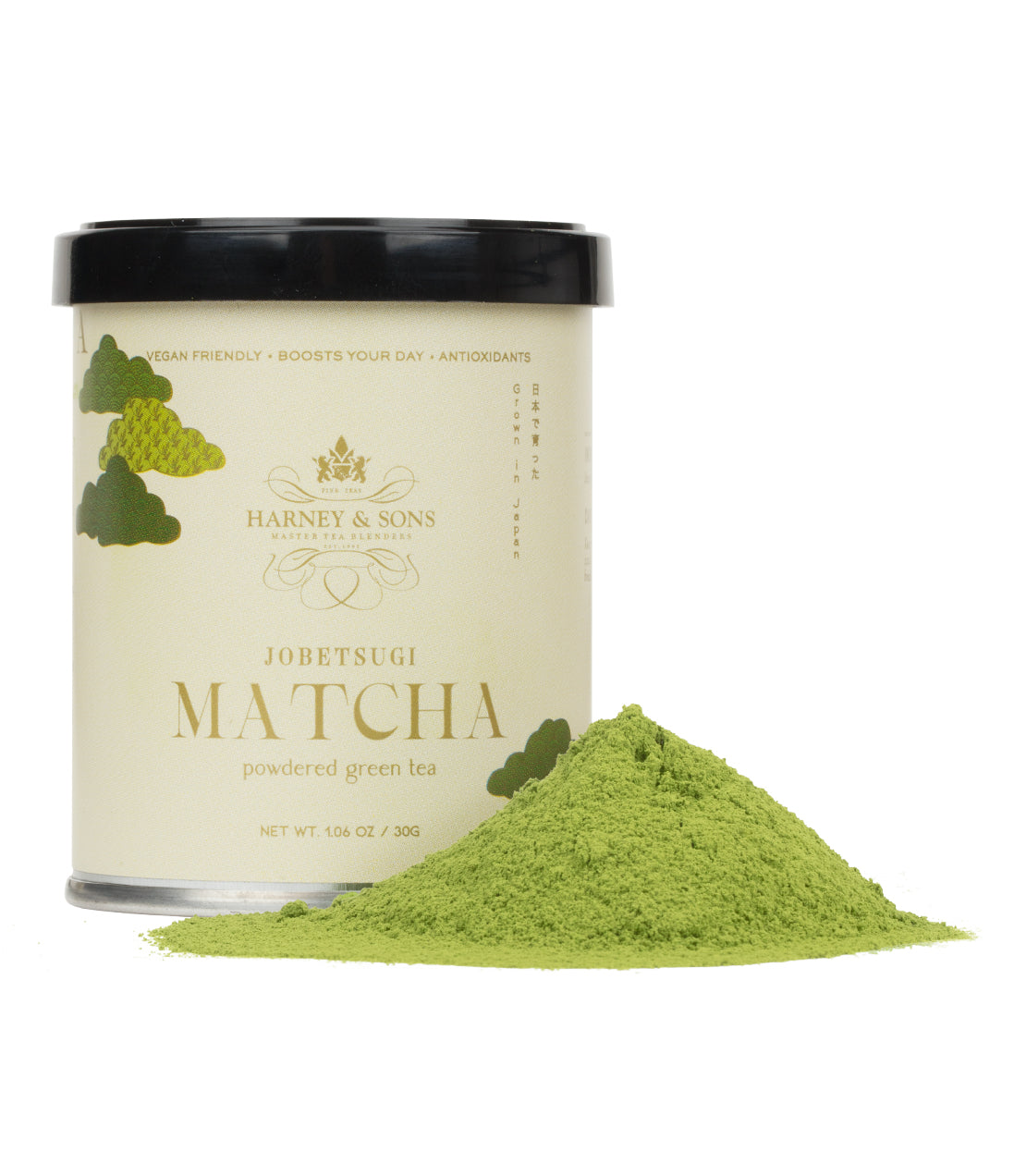
Packaging Type
Unit
Jobetsugi Ceremonial Matcha (Thin Grade)
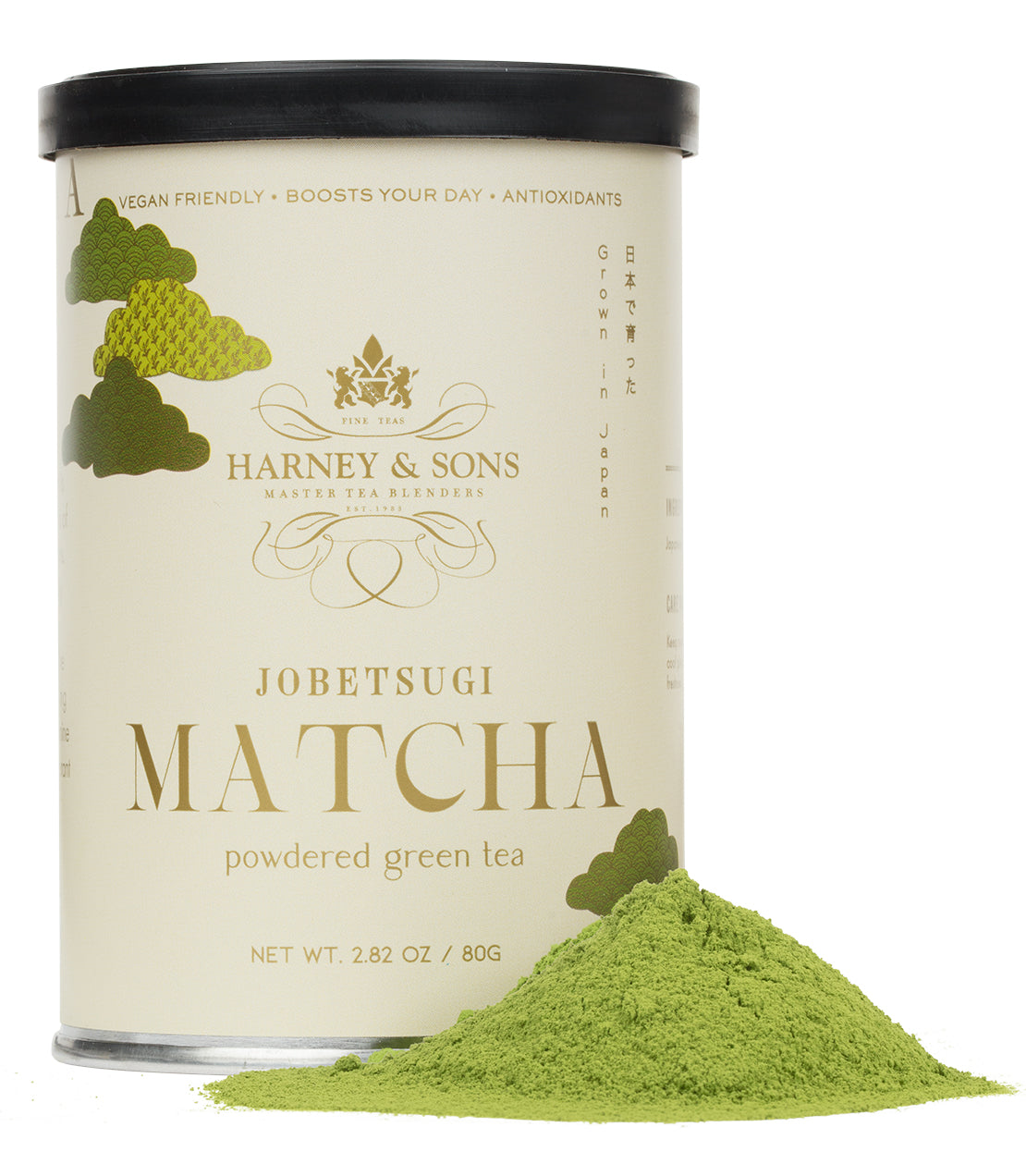
Build the set, whisk included
 Free Shipping
Over $59
 Ships in
3–5 Business Days
 Sip it and Love it,
Guaranteed
Description
Grown under shade in the gardens of Wazuka Valley, south of Uji, Jobetsugi comes from a region that has made matcha for centuries. The leaves are picked in the first spring harvest, when the savory umami in the cup is at its peak, then air-dried into the raw leaf called tencha. Stone mills grind that Tencha to powder slowly, stone turning against stone, and a single small tin takes close to two hours. What remains is a fine, brilliant-green powder, meant to be whisked into a bowl, not steeped in a pot.
Mike's Rating
 Details:
 Dry Leaves:
 Liquor:
 Aroma:
 Flavors:
 Caffeine Level:
 Body:
Body:
 Brewing Time:
 Brewing Temp:
Ingredients
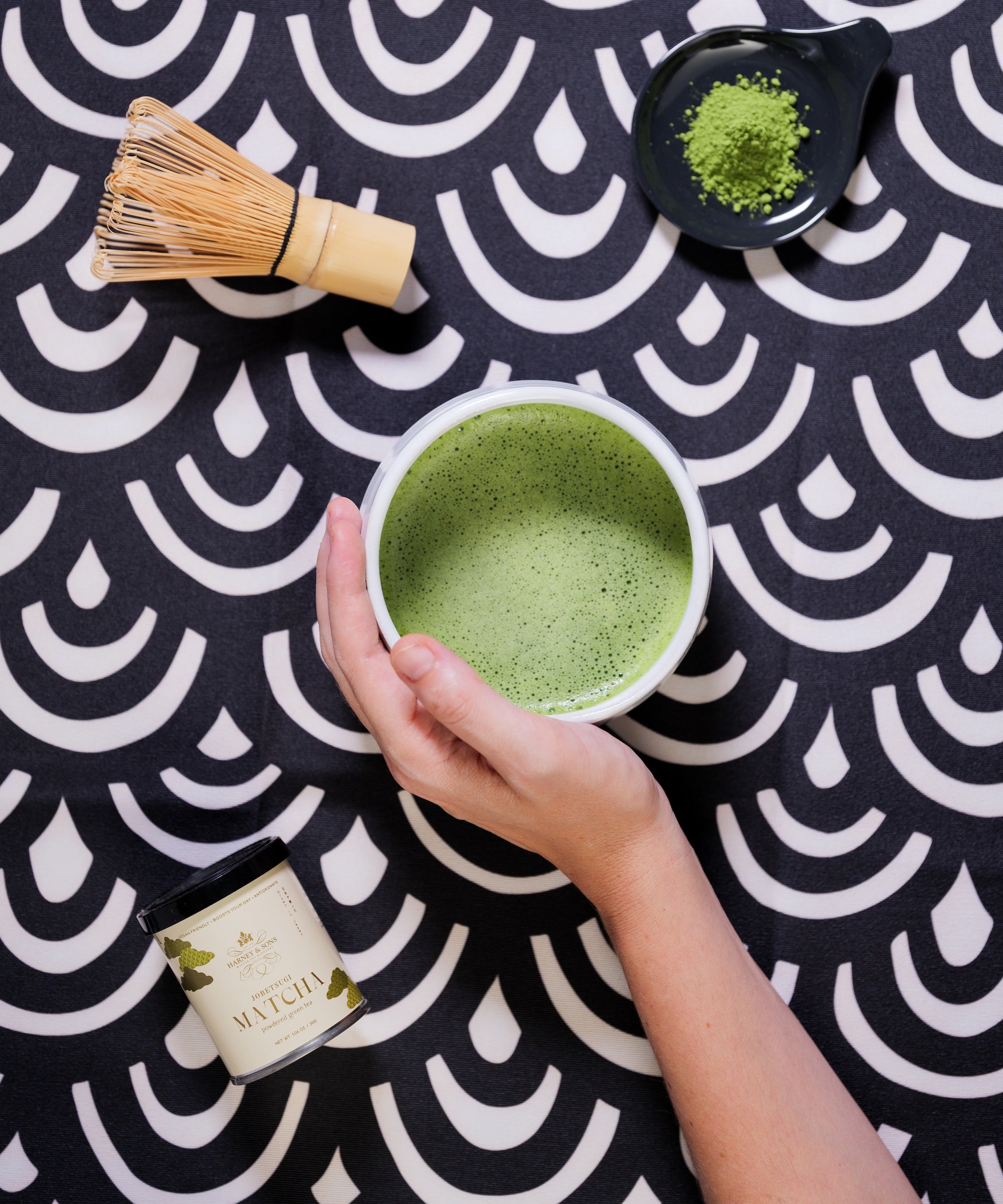
Make Your Matcha
Measure
Measure 2 grams, about a teaspoon, into a bowl or wide cup. For ideal results, sift through a strainer to prevent clumping.
Add water
Pour 120 ml (4 oz.) of 175ºF water over the matcha powder.
Whisk
Whisk briskly until smooth and frothy. A bamboo whisk is traditional, a small frother or a lidded jar also works.
Enjoy
Drink your matcha while it's still foamy and warm.
Where it grows
Grown in Uji, Japan
- RegionUji, Japan

Chosen at the Tasting Table
Fine matcha comes from Japan's traditional growing regions, but origin alone doesn't earn a place in this collection. Every tea is whisked and tasted at the Harney table, and tasted again, until it proves itself bowl after bowl. The grades run from everyday to ceremonial, and the standard holds for all of them. Sourced from a family who has been making Matcha for nearly 400 years.
Shaded Fields in Uji
Grown in the Uji area, Japan's oldest matcha region, and shaded before harvest for a deep green color and a rounded, mellow cup.
Stone-milled
The shaded leaves are ground between granite stones turning slow enough to stay cool, which is what keeps the powder this fine and this green.
Chosen to Harney Standards
Sourced and tasted to the same standards as all of our teas, as we've done since 1983.
The Cultivars in This Blend
Every Harney matcha is a decision made at the tasting table. The cultivars below are the plants behind this blend, each chosen for what it brings to the bowl.
See the cultivars (4)
Yabukita
- Region grown
- All Japan
- Harvest
- Machine harvested
- Grade
- FoundationThe dependable base most Japanese matcha is built on.
Japan's dominant cultivar, around three-quarters of all production. Balanced theanine and catechins, and the reference point against which every other cultivar is measured.
In this blend: Structural consistency and the familiar matcha baseline. As the foundation of an everyday blend, it delivers a reliable, clean cup, time after time.
Samidori
- Region grown
- Uji
- Grade
- PremiumHigh-grade leaf that builds the body of a ceremonial blend.
High theanine, smooth and rounded, and the dominant cultivar in Senjunomukashi. Distinct from Saemidori, deeper and richer, a true Uji cultivar.
In this blend: Smooth premium depth and rounded sweetness. Where it leads a blend, everything else is refinement.
Saemidori
- Region grown
- Uji / Kagoshima
- Grade
- PremiumHigh-grade leaf that builds the body of a ceremonial blend.
A cross of Asatsuyu and Yabukita, with the brightest green liquor of any cultivar. High theanine, and a fresh, marine character that develops during steaming.
In this blend: Vivid color and fresh brightness. A small amount transforms the visual character of a blend.
Okumidori
- Region grown
- Uji
- Grade
- PremiumHigh-grade leaf that builds the body of a ceremonial blend.
Late-budding, with high theanine and low bitterness. A reliable anchor in Uji blends, consistently smooth and deeply sweet across harvests.
In this blend: Smooth body and reliable harvest-to-harvest consistency. A steady hand for quality across seasons.
Chosen with Tsuyoshi Sugimoto, whose family has blended Uji tea for eight generations.
What people keep saying
4.9 out of 5 · 329 reviews
It is creamy, sweet smelling, just enough of a backbone and mild in a good way.
Definitely less creamy/sweet and more bitter than I used to get for the same $, yet this is where we are today for moderate—but legit first spring harvest—matcha.
My favorite matcha for lattes & pure matcha both, iced or hot.
Common questions
Everything you might be wondering before your first brew.
Yes. Matcha is green tea, made from the same plant, Camellia sinensis, as the rest of the tea we sell. The difference is how it is grown and prepared: the leaves are shaded for weeks before harvest, then dried and stone-ground into a fine powder. Instead of steeping leaves and removing them, you whisk the whole leaf into water and drink it.
Most green tea is steamed or pan-fired, rolled, and dried, and you steep it. Matcha starts from leaves grown under shade for several weeks, which changes their color and flavor, then dried flat and ground into powder. That flat, de-veined leaf has its own name, Tencha. Because you drink the whole leaf instead of an infusion, the taste is fuller and the color is brighter.
No. A bamboo whisk gives great froth, but a small electric frother or a lidded jar, or cocktail shaker all work.
About 80 milligrams in a standard 2 gram bowl, a little less than a typical cup of coffee. Because you are drinking the whole leaf rather than an infusion, matcha carries more caffeine than the same amount of steeped green tea.
Matcha is ground leaf, so it has far more surface area than whole-leaf tea and it fades faster once it meets air. Keep it sealed, cool, and away from light, and refrigerate it after opening.