




One of tea’s delights is the many options it presents to its drinkers. As well as multiple styles and a seemingly endless variety of flavors, tea offers a choice of preparation methods: loose leaf, teabags, or sachets. In this blog, we’ll discuss each of those three methods, their different advantages…and how they can affect the taste of your tea.

Loose Leaf: A Little More Work for a Lot More Flavor
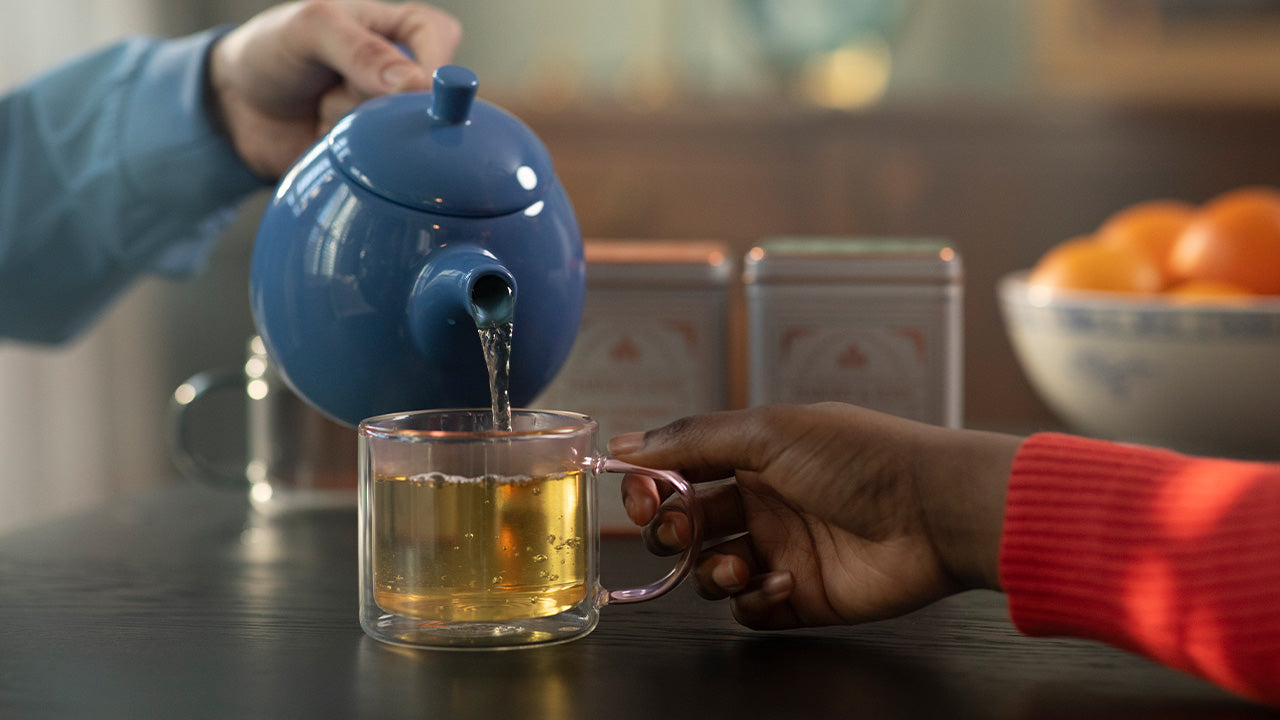
Loose leaf teas, made from tea leaves and herbals, can be brewed using a strainer, infuser, or teapot. The many advantages of this brewing method begin with the leaves themselves.
Loose leaf teas preserve more of the tea’s natural flavor and aromas. When steeped, they unfurl slowly, releasing their aromas and flavors more evenly and completely to create a more complex, and elegant taste.
Loose leaf tea leaves also have more room to expand as they steep, since there is no material surrounding them. This fuller expansion enables a more effective infusion, which produces a richer flavor and a more nuanced, expressive aroma.
As you’d expect, loose leaf is the method that most tea devotees prefer. Case in point: my parents, Mike and Brigitte Harney…who wouldn’t think of starting their mornings without a cup of loose leaf tea.
For beginners, there may be a bit of a learning curve to the brewing process, as you’re figuring out the proper tea-to-water ratio (peep this blog for tips), and how to tailor proportions to your individual taste. You’ll also want to get a few accessories (such as the aforementioned strainer, infuser, or teapot).
However, once you’re comfortable with the process, you’ll start to appreciate the ability to customize your experience…as well as the comforting ritual that’s part and parcel of loose leaf brewing.
There’s one more advantage to loose leaf brewing. Because the method has no packaging, it also has no microplastics. Microplastics can be a concern when using teabags and sachets produced by some other companies. Here at Harney & Sons, however, we’ve taken steps to eliminate microplastic concerns in those brewing methods as well. And since teabags have entered the chat…

Teabags: Brewed for the Busy
Teabags are small, flat, porous pouches made of paper designed to produce a single serving of tea. Teabags’ convenience, affordability, availability, and consistency of taste have made them the United States’ most popular brewing format, and they’re often your best choice when brewing conditions are less than ideal (say, when you’re in a rush or your water’s not quite hot enough).
Teabags generally brew faster and produce a stronger infusion than loose leaf tea or sachets. That’s because the tea inside them is broken into smaller particles, which allow color and flavor to release more quickly…even at lower water temperatures.
Most supermarket teabags are made with inexpensive teas…what our founder, John Harney, called “dust.” But with our family’s deep expertise sourcing outstanding loose leaf teas, we’re able to take a different approach to our teabags, sourcing great-tasting teas that deliver mouth-filling body and fuller flavors.
One more consideration: the paper used in some teabags can negatively affect the brewed tea’s taste. Typically, that’s because the paper in the bag is bleached with chlorine.
At Harney, we use oxygen to bleach our teabags’ paper, to make sure its taste isn’t affected…and we make sure of that, by actually tasting the teabag paper as part of our quality checks (the tea business isn’t always nonstop glamor, readers).
One more advantage of our teabag paper: it’s compostable (and thus, more environmentally friendly).

Sachets: Balancing Taste and Convenience
If you want the more nuanced flavor of loose tea but enjoy the convenience of teabags, our sachets offer the perfect balance.
Tea sachets are permeable, usually pyramid-shaped pouches that generally contain whole leaves and offer multiple benefits for their users.
Foremost among those benefits is convenience. Brewing tea with a sachet doesn’t require you to own any extra accoutrements (besides a cup), and the portions have already been measured out. All you have to do is add water of the appropriate temperature and then wait the recommended number of minutes while your tea steeps.
With few exceptions, we use the same blends in our sachets as we do in our loose tea. That makes for a taste that’s extremely similar (though not precisely the same, due to the tea in sachets being constrained by packaging).
Speaking of packaging, we’ve again taken steps to make ours more environmentally friendly. The vast majority of our sachets (the sole exception being Hot Cinnamon) are made with an industrially compostable material derived from sugarcane.
How Will Your Tea’s Brewing Method Affect Its Taste?
To demonstrate the answer to this question, we’re going to use one of our most popular black teas: Paris.
In loose leaf form, Paris is offered in quantities from a one-pound bag down to a four-ounce tin. Teabags are available in boxes of 20 or 50, and sachets range from a bag of 50 to a tin of 20. (For that matter, Paris even comes in iced tea pouches…but that’s a blog for another day.)
Brewing a perfect cup of Paris requires water heated precisely to 212°F and a steeping time of 4 to 5 minutes. However, the format you choose makes a difference to the end result.
Loose leaf brewing with an infuser or teapot gives the tea leaves room to unfurl and release their flavors, letting Paris become all that it can be. Rich and nuanced, the blend layers bold black tea with notes of vanilla, caramel, and bergamot, allowing a gentle fruitiness to shine through.
Teabags are designed for ease and speed, making it simple to enjoy a great cup in moments. While the smaller leaf size and compact brewing space can gently soften some aromatic nuances, Paris remains rich and enjoyable, with its finer notes blending into a fuller black tea foundation.
Brewing Paris in a tea sachet offers a middle ground between flavor and convenience. Even though the leaves have less room to expand, the intended balance of sweet and floral notes still comes through…plus you gain the time-saving convenience of not needing extra tools, such as a strainer or infuser.
Which Method is Best?
Honestly, there’s no right answer to that question. It all comes down to whether you prefer maximum flavor, maximum convenience, or maximum compromise.
Loose leaf teas require more effort but deliver the fullest flavor. Teabags offer greater convenience, but often at the expense of nuance. For many drinkers, sachets provide a just-right balance that combines ease with a fresher, more complex tea.
Ultimately, all three methods are simply different paths to the same destination: a warm, soothing cup that invites comfort, clarity, and a moment of calm. However you brew, we hope you’ll enjoy the journey.
22 comments
Gina Kneeream
I thoroughly enjoyed the article, but it does not explain what the hot cinnamon tea sachets are made of. I am absolutely addicted to this tea both in the regular and decaf variety and want to try the herbal variety. Just want to make sure there are no micro plastics in the sachet. Thank you so much. I love your product.
I thoroughly enjoyed the article, but it does not explain what the hot cinnamon tea sachets are made of. I am absolutely addicted to this tea both in the regular and decaf variety and want to try the herbal variety. Just want to make sure there are no micro plastics in the sachet. Thank you so much. I love your product.
Bobbie Boyd
Does using a sachet make tea stronger? At the present I’m using 2 teabags of Raspberry herbal tea for my mom’s morning cup. I’m just wondering if it would be more cost effective to use 1 sachet or just get loose tea. Since it’s an herbal tea I wasn’t sure which was the best way to go. Any help would be greatly appreciated.
Does using a sachet make tea stronger? At the present I’m using 2 teabags of Raspberry herbal tea for my mom’s morning cup. I’m just wondering if it would be more cost effective to use 1 sachet or just get loose tea. Since it’s an herbal tea I wasn’t sure which was the best way to go. Any help would be greatly appreciated.
Cathy
Very helpful information. I’ve been particularly concerned about micro plastics in sachets and often would cut them opened to compost the leaves and trash the bag! For that reason, I mostly brew loose tea. Thank you for clarifying.
Very helpful information. I’ve been particularly concerned about micro plastics in sachets and often would cut them opened to compost the leaves and trash the bag! For that reason, I mostly brew loose tea. Thank you for clarifying.
Linda Kornreich
I have been using a French Press for brewing loose tea for some time. Sachets are very efficient and I am glad there is that choice.
I have been using a French Press for brewing loose tea for some time. Sachets are very efficient and I am glad there is that choice.
Carol
A very nice article on the ways we may prepare our tea.
A very nice article on the ways we may prepare our tea.
SANDRA THALMANN
This article has been very informative in explaining the difference between the different approaches in fixing the teas. Thankyou!!
This article has been very informative in explaining the difference between the different approaches in fixing the teas. Thankyou!!
Alice
There is another way to brew loose leaf tea. It uses a Turkish teapot-similar to a double boiler. It does take longer! First three tablespoons of loose tea are placed in the upper part and three cold tablespoons of water are poured over the tea. The lower portion is filled with water and brought to a boil. After the boiling point is reached, the water is turned to a simmer. The tea leaves are steamed for 15 minutes. Then the hot water from the lower kettle is poured over the tea leaves. They are steeped for 30 minutes with the remaining water in the lower kettle. This brew is very strong and once completed needs to be diluted in half. It tastes delicious and is more flavorful than loose tea in an infuser.
There is another way to brew loose leaf tea. It uses a Turkish teapot-similar to a double boiler. It does take longer! First three tablespoons of loose tea are placed in the upper part and three cold tablespoons of water are poured over the tea. The lower portion is filled with water and brought to a boil. After the boiling point is reached, the water is turned to a simmer. The tea leaves are steamed for 15 minutes. Then the hot water from the lower kettle is poured over the tea leaves. They are steeped for 30 minutes with the remaining water in the lower kettle. This brew is very strong and once completed needs to be diluted in half. It tastes delicious and is more flavorful than loose tea in an infuser.
Ivy
I used to drink tea from bags and sachets until I discovered loose almost 20 years ago. I pour a scoop depending on how strong I want it into a glass measuring cup, then pour about 12 ounces of boiling water in, steep for 5 minutes, then pour the tea through a super fine strainer that rests over the top of my cup or mug. Once you try loose tea, it’s nearly impossible to go back to bagged.
I used to drink tea from bags and sachets until I discovered loose almost 20 years ago. I pour a scoop depending on how strong I want it into a glass measuring cup, then pour about 12 ounces of boiling water in, steep for 5 minutes, then pour the tea through a super fine strainer that rests over the top of my cup or mug. Once you try loose tea, it’s nearly impossible to go back to bagged.
Kim Hunter
Well done! I totally agree, and I appreciate that Harney’s doesn’t use plastic in their sachets, nor bleach in their teabags. The teabag was an accidental American invention, when a tea merchant decided to save money on his samples, and used silk pouches instead of tin cans. He had no intention of his customers brewing the tea IN the pouch, but they did and they loved it!
Well done! I totally agree, and I appreciate that Harney’s doesn’t use plastic in their sachets, nor bleach in their teabags. The teabag was an accidental American invention, when a tea merchant decided to save money on his samples, and used silk pouches instead of tin cans. He had no intention of his customers brewing the tea IN the pouch, but they did and they loved it!
Ann
I too am a fan of brewing loose tea to get all the flavor and aroma nuances. And using one of your in-cup strainers, it’s really just about as convenient as a sachet or bag. However, I do buy some sachets of my favorite for travel – easy to pack and always prepared!
I too am a fan of brewing loose tea to get all the flavor and aroma nuances. And using one of your in-cup strainers, it’s really just about as convenient as a sachet or bag. However, I do buy some sachets of my favorite for travel – easy to pack and always prepared!
Syager
Thank you for the great info. I look forward to reading more of your articles. I’m new to loose leaf and am enjoying the adventure.
Thank you for the great info. I look forward to reading more of your articles. I’m new to loose leaf and am enjoying the adventure.
Barry
Excellent article!
Excellent article!
Geoffrey Selling
I only brew loose teas—in my gorgeous large Polish teapots. I have 10 different Harneys teas that I love and cycle through somewhat randomly, though I do sometimes have a hankering for one or another. One of my retirement goals was to go from bag tea to loose tea and now, the making of my morning tea is a much loved ritual…..and I drink tea on and off all day. The only teas I don’t buy from Harneys are a raspberry black tea and a peach black tea which I source elsewhere, since Hs doesn’t sell them. But I love my teas, love the tea making ritual and love knowing that Harneys maintains such high quality standards—and such an interesting selection of teas to choose from. My faves: Darjeeling, Paris, Black Vanilla, Fruites d’Alsaces, Apricot, Tower of London, Victorian London Fog, Earl Gray (just trying the Supreme this last purchase), English Breakfast and Vanilla Strawberry. I always buy it in pounds and keep ceramic cannisters full of each type and store the rest in the freezer, to maintain freshness.
I only brew loose teas—in my gorgeous large Polish teapots. I have 10 different Harneys teas that I love and cycle through somewhat randomly, though I do sometimes have a hankering for one or another. One of my retirement goals was to go from bag tea to loose tea and now, the making of my morning tea is a much loved ritual…..and I drink tea on and off all day. The only teas I don’t buy from Harneys are a raspberry black tea and a peach black tea which I source elsewhere, since Hs doesn’t sell them. But I love my teas, love the tea making ritual and love knowing that Harneys maintains such high quality standards—and such an interesting selection of teas to choose from. My faves: Darjeeling, Paris, Black Vanilla, Fruites d’Alsaces, Apricot, Tower of London, Victorian London Fog, Earl Gray (just trying the Supreme this last purchase), English Breakfast and Vanilla Strawberry. I always buy it in pounds and keep ceramic cannisters full of each type and store the rest in the freezer, to maintain freshness.
Gail E Garris
Thank you so much for this article. Loved the convenience of sachets but after all the bad publicity regarding microplastics switched completely to loose leaf. Now it’s wonderful to know that I can safely enjoy both. Once again trust Harney and Sons.
Thank you so much for this article. Loved the convenience of sachets but after all the bad publicity regarding microplastics switched completely to loose leaf. Now it’s wonderful to know that I can safely enjoy both. Once again trust Harney and Sons.
Wes
I enjoy using a gaiwan for unflavored teas. It’s a lot more convenient to clean than infusers/teapots and the tea does not get oversteeped.
I enjoy using a gaiwan for unflavored teas. It’s a lot more convenient to clean than infusers/teapots and the tea does not get oversteeped.
Kanesha
Nice! I definitely have a mix of loose and bags depending on time and effort I can put into making my tea for that day. Always wondered the difference between sachets and bags, so thanks.
Nice! I definitely have a mix of loose and bags depending on time and effort I can put into making my tea for that day. Always wondered the difference between sachets and bags, so thanks.
Nicole
I prefer loose leaf, but it is great to hear that H&S is actively taking steps to reduce microplastics in its teabags and sachets. Thank you!
I prefer loose leaf, but it is great to hear that H&S is actively taking steps to reduce microplastics in its teabags and sachets. Thank you!
Alyssa Walsh
I love loose leaf tea, but I have the opportunity to enjoy tea more often with sachets.
I love loose leaf tea, but I have the opportunity to enjoy tea more often with sachets.
CATHY RACICOT
I brew both loose tea and sachets. I’ve tried quite a few different flavors and have introduced others to your teas. Love you teas! ❤️🫖☕️
I brew both loose tea and sachets. I’ve tried quite a few different flavors and have introduced others to your teas. Love you teas! ❤️🫖☕️
Cynthia
I’ve used Harney sachets for more years then I want to admit to..😊
I’ve tried many different kinds and still try a new one on occasion but have a list of favorites that I always turn to. I’m programmed for first thing in the morning, 10am, 2pm and 6pm with a different tea for each time of day. The sachets have never let me down and my day would not be as pleasant without Harney’s contribution.
I’ve used Harney sachets for more years then I want to admit to..😊
I’ve tried many different kinds and still try a new one on occasion but have a list of favorites that I always turn to. I’m programmed for first thing in the morning, 10am, 2pm and 6pm with a different tea for each time of day. The sachets have never let me down and my day would not be as pleasant without Harney’s contribution.
Linda
Excellent information ! I enjoyed reading this article and learning something new. Thank You.
Excellent information ! I enjoyed reading this article and learning something new. Thank You.
Victoria
Great article!
I love to brew my tea loosely. The flavors are what I look for when drinking tea.
I used to only use tea bags until I finally discovered the perfect cut of tea. But honestly it’s all good!
Great article!
I love to brew my tea loosely. The flavors are what I look for when drinking tea.
I used to only use tea bags until I finally discovered the perfect cut of tea. But honestly it’s all good!