


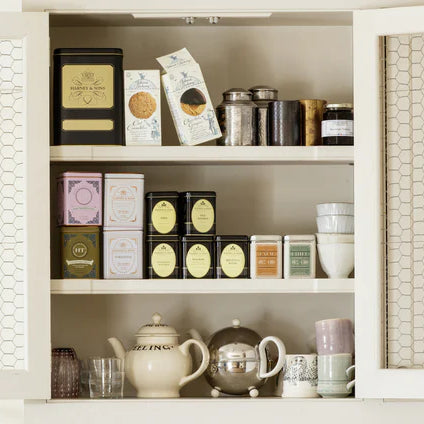


In case that freshly hung 2026 calendar on your wall hasn’t already told you, January is National Hot Tea Month in the U.S. and Canada…and we’ve chosen to celebrate by collecting hot takes on hot tea. Besides asking our friends and coworkers, we turned to the internet for opinions…which, as it turns out, the internet has no shortage of.
Well, you know what, internet? We have opinions too. So with no further delay, we’re going to share a few provocative tea-centric thoughts from others …followed by our own responses.
Green tea is better for your health than black tea.
Our answer to that is a firm, “It depends.” Green tea is rich in the antioxidant EGCG (epigallocatechin gallate), the possible benefits of which include everything from liver protection to anti-cancer properties. Black tea, on the other hand, contains theaflavins, which can prevent free radicals from damaging your cells, and may help lower your blood sugar.
Both have flavonoids that may help heart health, both have the relaxing amino acid L-theanine, and both have caffeine that can keep you alert. In our opinion, you can’t go wrong with either.

All iced tea should be sweet tea.
We’re going to guess this take hails from somewhere below the Mason-Dixon line, in the land where requesting unsweetened tea marks you as either a Yankee, a diabetic, or both. Far be it from us to get between a Southerner and their sweetener, but we’d suggest you get your dentist’s opinion on this one.
If you’d like to experiment with a sweet tea that has more to do with Asia than Alabama, try our Sweet Azuki Black: a soothing aromatic experience that honors the tradition of red bean treats.

Rooibos tea tastes like medicine.
A strong take, but hardly a universal one. While many people perceive the taste of rooibos tea as sweet and nutty, other people can find its taste to be medicinal. It all comes down to your genetic predisposition. It’s the same reason some people think cilantro tastes citrusy, while others think it tastes like hand soap.
If you’re a rooibos lover, we’d like to suggest a few of our favorites: Organic Rooibos, Organic Rooibos Chai, and Thai Rooibos.

Chamomile tea tastes bland.
Granted, the taste of chamomile tea can be sweetly subtle…but if you’re tasting nothing, it’s possible that you’re simply not steeping it long enough. We suggest you pick up a package of our Chamomile Herbal, steep it for five minutes at 212°F, and then get back to us.
Adding cinnamon to chai ruins the tea’s balance.
How much cinnamon are we talking here? We’ve found that a moderate amount of cinnamon, combined with other spices like cardamom, ginger, and cloves, can create a warm, harmonious experience. But yeah, too much cinnamon can overpower the other flavors. As with so many other situations in life (such as dieting, exercising, and collecting lawn ornaments), the key is moderation.
Tea needs milk and sugar to be enjoyable.
We can understand how some strong black teas might need milk and sugar, but there’s a whole world of alternatives out there that shine without additives. Try our Organic Assam or our Kenilworth Ceylon, just to explore the natural spectrum of flavors (and if that doesn’t do it for you, you can always go back to tea-colored sugar milk).
Oversteeping Assam tea actually makes it better.
Oversteeping Assam tea actually makes it bitter. When leaves soak in hot water for too long, they release more compounds, and can give your tea an astringent flavor. That said, if astringency floats your boat, oversteep away.
Some of our more popular Assam teas include CTC Assam and Decaf Assam.
Adding a pinch of salt to a cup of tea can improve its flavor.
This strong opinion (which we found in the book Steeped: The Chemistry of Tea, by Michelle Francl) caused quite the kerfuffle back in 2024. According to science, a tiny pinch of salt really can suppress bitter notes in tea, and make it taste smoother.
This, of course, presumes that you’re starting off with a cup of bitter tea (and if you’re that person who likes to overstep Assam…boy, have we got a hot tip for you).
Powdered iced tea is just as good as iced tea from a bag.
Well…it’s faster, we’ll grant you that. So if you’re running late for work, and you’re trying to brew up some refreshing iced tea on your way out the door, then powdered tea is clearly the way to go. But if you’re not running late for work, and you have a few minutes to use a bag instead, we think you’ll find that freshly brewed tea offers a richer, more nuanced flavor and aroma than powders (which often contain artificial flavors, sweeteners, and preservatives).
See for yourself, by sampling our Soothing Vanilla Fresh Brew Iced Tea, Organic Green with Coconut Fresh Brew Iced Tea, or Organic Plain Black (Classic Black) Fresh Brew Iced Tea.
Milk goes in the cup first, and then you add tea.
If you’re using a fine China cup, putting milk in before you add the hot tea may help prevent the delicate porcelain from cracking. Otherwise, there are several good arguments for pouring tea into a mug, then adding milk.
For one thing, cold milk will lower water temperature and compromise proper infusion. For another, pouring tea first lets you appreciate the tea’s flavor before diluting it…and lets you judge its strength before adding milk.

Heating water for tea in a microwave is just as good as heating it in a kettle.
That may be what Big Microwave wants you to think, but it’s not true…and we know, because we wrote a whole blog about it, Kettle vs. Microwave, in 2020. There are all kinds of science facts involved, but the bottom line is this: a kettle heats fluids more uniformly, which is essential when you’re brewing tea that calls for a specific water temperature.
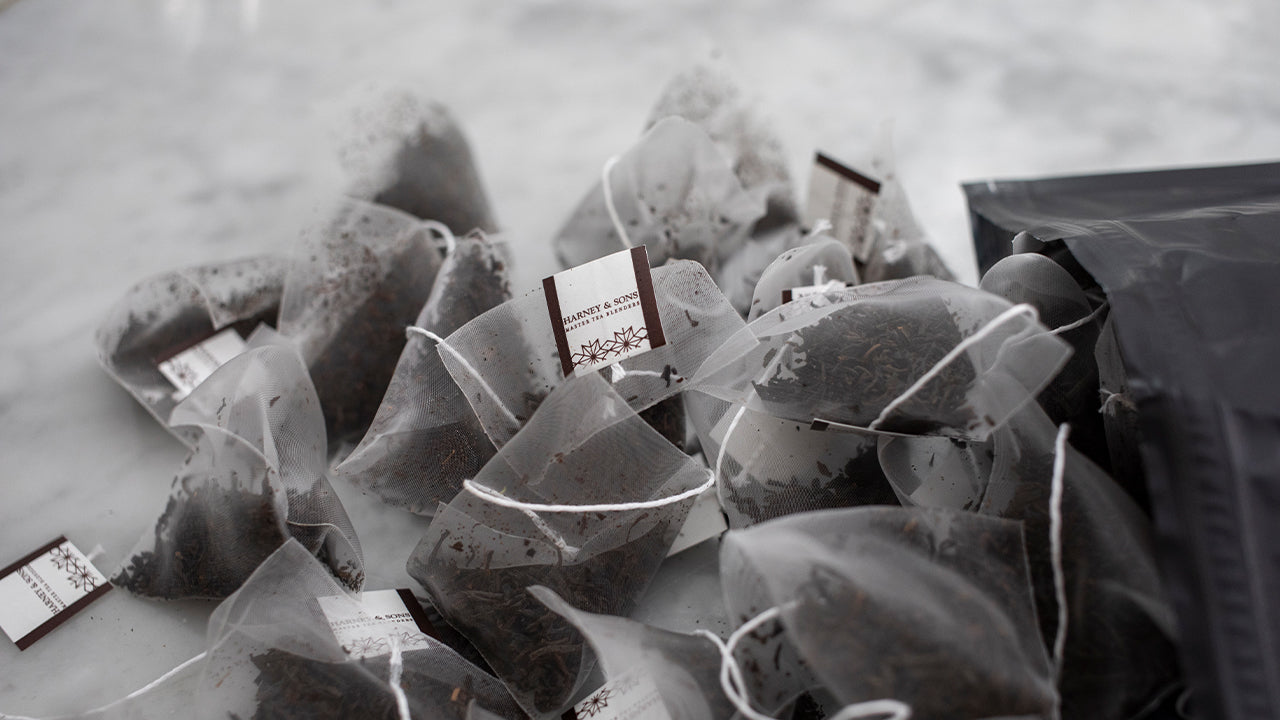
Squeezing your teabag is an easy way to get a more robust cup of tea.
Look, if you’re a confirmed squeezer, we can’t stop you. It’s your life, it’s your teabag, and squeezing can create a somewhat stronger brew (as well as a less drippy bag). However, squeezing can also put things in your tea that you don’t want in there, such as extra tannins and oils, plus the bag’s bitter dregs. Don’t say we didn’t warn you.

Bubble tea doesn’t count as tea.
Well, actually (pardon us while we adjust our glasses), most bubble teas start with a foundation of brewed black, green, or oolong tea before the milk, sweeteners, tapioca pearls, et cetera get added. Is that pure tea? No. But if you think a Caramel Ribbon Crunch Frappuccino counts as coffee, then bubble tea counts as tea.
If you’d like to make your own bubble tea at home, our Bubble Tea Set (complete with reusable straws) will let you do exactly that.

The worst loose-leaf tea is better than the best bagged tea.
Like most hot takes, this is a little extreme. High-quality specialty bagged teas (ours, for instance) rival decent loose leaf…but we’ll agree that overall, loose leaf tea in an infuser can provide a superior experience.
The larger, less processed leaves expand as they steep, creating a more full-bodied flavor. Our blog Loose Leaf, Sachet or Teabag? can tell you more.
Aged pu-erh tea tastes like dirt.
That’s less of an opinion than an observation. The real question is: do you like it?
Because pu-erh tea goes through a fermentation process, it does have an extraordinarily earthy flavor. For many tea drinkers, that makes it an acquired taste…but once you’ve acquired it, there’s no turning back. Learn more with our handy Pu-erh Tea 101 blog entry, then start exploring different varieties (our entry-level Pu-erh tea is a fine place to start).

Precise water temperature doesn’t significantly affect the taste of tea.
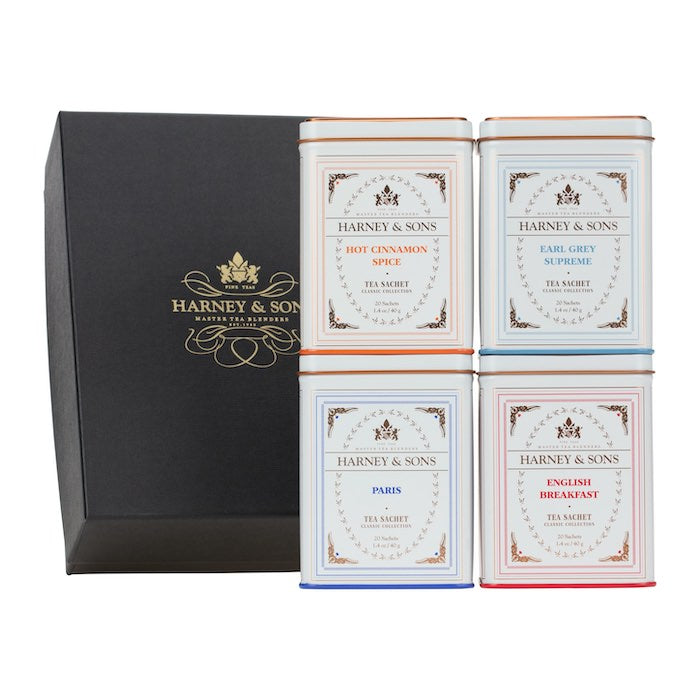
There are hot takes, and then there are takes that are downright silly. The temperature that’s right for brewing a cup of our Hot Cinnamon Spice tea (212°F) would be all wrong for brewing a cup of our Earl Grey Matcha (175°F). Unless you were born without taste buds, precise water temperature is critical to brewing tea that has the proper aroma, flavor, and strength. Water that’s too hot for the tea releases too many tannins, resulting in a bitter, astringent taste. Water that’s too cool for the tea releases too few tannins, resulting in a weak, bland infusion.
Tea will never be as culturally important in the United States as coffee is.
Never say never!
True, coffee has a strong foothold in U.S. culture. Many Americans work at a non-stop tempo, and coffee’s relatively high caffeine levels support that pace…and yet, tea is growing in popularity.
Younger consumers are embracing its wellness benefits, while older ones are growing to appreciate tea’s calming qualities…and companies like ours are doing a lot to introduce people to tea’s many varieties and appeal. Give it a few more years, and maybe America will have as many tea shops as it has coffee shops (hey, we can dream).
I can drink white tea before bed with zero problems.
Can you, though? Some white teas (named for the whitish appearance of the unopened buds and leaves used to make them) can have more caffeine than certain black teas. Much as we love our Mutan White (as do many others), we’re not so sure we’d drink it last thing in the evening. You can learn more from our White Tea 101 blog.
Whether or not your National Hot Tea Month is packed with hot takes, we hope it’s filled with old favorites…and new discoveries. Happy sipping!

1 comment
Luann
Fun to read! And informative.
Recovering tea bag squeezer.
Fun to read! And informative.
Recovering tea bag squeezer.